Robert and I see a lot of funds, both on our approved list and new ideas. I think AI is mentioned in almost all of them, whether it’s an AI or tech fund, or simply about the use of AI in the team to help improve processes. I’m sure we have all used AI in one way or another and it will likely become a much bigger part of our lives.
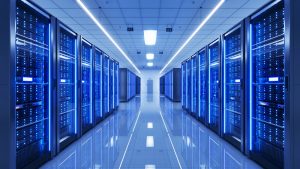
Currently there are huge capacity constraints with powering these AI models. This is where the data centres come in. The UK has 520 data centres and there are nearly 100 proposed, which is the second highest globally after the US. But I will put it in perspective, in the US there are around 4400 currently operating and nearly 2000 proposed. The largest AI data centre proposed is the Meta Hyperion data centre which will be in Louisiana and is due for completion in 2032. (I will be using this data centre as the example throughout)
There are two types of data centres, ones for non-AI compute and those specialised in AI, both have different requirements and needs across the infrastructure and operations.
McKinsey estimate that nearly $7 trillion investment is needed across the two types, and the majority of that is required for data centres for AI. What does this investment look like and what is the actual breakdown of the data centre build?
I’ll use McKinsey’s breakdown of five inputs into a data centre: the builders, the energisers, the technology developers and designers, the operators, and the AI model developers. A lot of time is spent discussing the final three categories with companies like NVIDIA, Google, OpenAI and Anthropic all falling into one of them, but how much is discussed about the first two categories.
The builders, this includes design and construction firms, from initial planning to full completion an AI data centre can take nearly a decade with the build taking anywhere between 1.5-3years depending on size, availability of materials and labour. There are already concerns about bottlenecks in the materials and labour areas due to shortages. The Hyperion data centre is expected to employ over 7500 people at the peak of construction.
Wood Mackenzie estimate that around 27 to 33 tonnes of copper is needed per megawatt of capacity. The Hyperion data centre uses 5 gigawatts of power (5000 megawatts), so taking the conservative number of 27 tonnes per megawatt, this data centre will need 135,000 tonnes of copper alone. Copper is key for the cooling systems, grounding and for the power distribution in the data centre. It’s estimated that by 2035 current copper mines will only meet 70% of global demand.
Copper isn’t the only material which might create bottlenecks, the amount of steel needed to build an average data centre is more than 20,000 tonnes, for multi-building sites its around 200,000 tonnes, and for Meta’s Hyperion it is looking more like several hundred thousand tonnes will be required.
The energisers, this includes energy providers and cooling and electrical equipment manufacturers. As mentioned above this data centre will use 5 GWs of power/ energy a day and 43,800 GW per year, to put this into perspective that is currently half of the amount the entire state of Louisiana consumes annually. This will require significant upgrades to the state electricity grid to keep up with state energy needs which could cost billions. Meta alone has a partnership with Entergy (an American energy company) which is building specific transmission lines and new power generation plants to feed the Hyperion data centre. This isn’t just an issue in Louisiana, significant investment will be needed globally as more data centres are approved and building begins.
AI data centres require liquid cooling technology due to the density of the heat the chips generate. There are various types of liquid cooling including direct to chip, immersion, rear door heat exchangers and waterless or closed-loop coolers. Around 19 million litres of water are used directly every day by a mega AI data centre to cool servers. For context an Olympic sized swimming pool holds 2.5 million litres of water, so roughly 7.6 Olympic swimming pools worth of water are used daily for direct cooling. This is unsustainable hence the latest developments in waterless or closed-loop systems which recirculate water indefinitely internally.
There are constant developments in technology, not only in the AI models and chips themselves but also developments in efficiency of the builds or cooling systems. Currently there is a supply deficit in multiple points in the chain and as more capacity is required for these models and chips the demand is only going to increase. This impacts multiple parts of the chain and significant investment is needed, this also presents good opportunities for investors as companies across the chain will benefit from the AI build out.
Emily Cave – Research Analyst

FPC26741
All charts and data sourced from FactSet
Hawksmoor Investment Management Limited is authorised and regulated by the Financial Conduct Authority (www.fca.org.uk) with its registered office at 2nd Floor Stratus House, Emperor Way, Exeter Business Park, Exeter, Devon EX1 3QS. This document does not constitute an offer or invitation to any person in respect of the securities or funds described, nor should its content be interpreted as investment or tax advice for which you should consult your independent financial adviser and or accountant. The information and opinions it contains have been compiled or arrived at from sources believed to be reliable at the time and are given in good faith, but no representation is made as to their accuracy, completeness or correctness. The editorial content is the personal opinion of Emily Cave, Research Analyst. Other opinions expressed in this document, whether in general or both on the performance of individual securities and in a wider economic context, represent the views of Hawksmoor at the time of preparation and may be subject to change. Past performance is not a guide to future performance. The value of an investment and any income from it can fall as well as rise as a result of market and currency fluctuations. You may not get back the amount you originally invested. Currency exchange rates may affect the value of investments.
