
6th March 2026
While it is impossible to ignore the human suffering during the current conflict in the Middle East, unfortunately professional investors cannot ignore the impact of war on financial markets, as difficult as that may be. As we are currently witnessing, financial markets do not stop during these upsetting times, and therefore neither can fund managers. As with all fund managers, we are constantly thinking about our underlying investors and why they have chosen to invest with us, even more so in these turbulent times. As stewards of ordinary people’s hard-earned savings, our job is to continue to strive to grow the wealth entrusted to our care in real terms over the long term. During risk-off episodes, whether caused by wars, pandemics, the imposition of trade tariffs or any other reason, we believe it is our duty to continue to be on the lookout for buying opportunities where assets have cheapened below what we assess to be fair value. What we are not doing is trying to make a call on how long the Iran conflict will last and when the prices of certain assets will peak or trough. Rather, is the price of an asset more or less attractive today than it has been recently, is there a margin of safety if we are wrong and will it deliver on our objective of achieving a positive real return over the long term?
That has always been our philosophy since day one of Hawksmoor and all the way through the management of Vanbrugh, our ‘cautious total return’ and longest running fund at 17 years old. We appreciate this is a different philosophy to other managers of cautious mandates, who might prioritise preservation of capital over the very short term during weaker markets. We of course understand the power of protecting capital on the downside, which then allows performance to compound from a higher base in any subsequent recovery. Indeed, Vanbrugh has an excellent track record of doing just that, consistently experiencing shallower drawdowns versus equity markets in the various risk off episodes that have punctuated its life. As managers we are aware, however, of the payoff between short term capital preservation and long run return potential and spend lots of time thinking about how to get that balance right. Timing the recovery perfectly after market shocks is difficult and can result in failing to capture any subsequent upside. Assuming an observable margin of safety, we’d rather be early if it means capturing more upside over our investing time horizon. Times like this remind us of the classic, well-worn Ecclesiastes quote, “Those who wait for perfect weather will never plant seeds. Those who look at every cloud will never harvest crops”.
That introduction leads into what we are currently thinking and doing in the Hawksmoor funds. The short answer is that we have modestly added to our UK equity exposure across all three funds, via existing large cap focussed investment trusts that had dipped to an attractive discount. Think of this as dipping a toe in if the sell-off is short lived. The longer answer involves what we are ready to do if the sell-off is more prolonged.
Over the last couple of months, we had recognised that many equity markets, such as UK, Europe, Japan and Asia had hit all-time highs thanks to a combination of strong earnings momentum and some valuation rerating. We incrementally banked profits and modestly increased cash and short dated bonds from low levels. As a result, Vanbrugh’s equity exposure had fallen from 43% in September last year to around 40% at the start of March. We accept that using equity exposure is a blunt measure of risk as 40% in cheaply valued UK, European and Japanese equities is, in our mind, much lower risk than having 40% in a US equity index fund. Our definition of risk is the probability of permanent loss of capital in real terms over 3+ years, not volatility nor the deviation from a benchmark. During those months of generally reducing risk, we have continued our research process (over 70 meetings in the first two months of the year) and identified attractive opportunities but were waiting for a better entry point after the strong gains of recent months.
One of those areas is the healthcare sector, where both generalist and specialist investors are getting excited about improving valuations and fundamentals setting up a positive outlook. There are many flavours of healthcare exposure available to investors – just look at the range of funds in the Polar Capital stable. Investors can choose their Blue Chip mostly pharmaceutical fund that is promoted with an expectation of lower volatility than the sector, while at the other end of the spectrum is the Biotechnology fund that is the encapsulation of a more volatile but higher returning mandate. A dedicated note on the sector will follow in order to cover it in more detail, but we believe that even our ‘cautious’ Vanbrugh fund can and should have exposure to a structural growth theme such as healthcare when the valuation opportunity arises.
Other areas of focus are those investments which have high interest rate sensitivity such as property and infrastructure. These asset classes may experience weakness if the Iran conflict is prolonged due to expectations about the future path of inflation and interest rates being higher than previously thought. At the moment, trusts like Primary Health Properties and HICL Infrastructure have behaved relatively calmly and haven’t cheapened enough for us to add exposure. Likewise, equities in regions like Japan and India that rely on imported oil for their economies, have sold off but again not enough to warrant an increase to our already decent allocation. If they remain depressed after the conflict and the oil price has subsided, then that would be a more compelling scenario for us to add.
Although we haven’t made significant changes to the funds during these volatile days, investors should view that positively in that the prevailing portfolios were not in poor shape before this week began. Further, investors can be reassured that we are spending every day on the lookout for opportunities to refresh the portfolios to enhance the quality, diversification and long-term return prospects of the Funds.
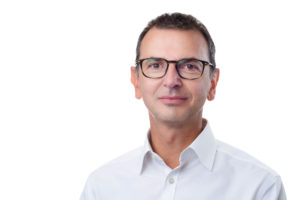
Daniel Lockyer – Senior Fund Manager
Subscribe to receive our latest commentary and insights straight to your inbox.
For professional advisers only. This article is issued by Hawksmoor Fund Managers which is a trading name of Hawksmoor Investment Management (“Hawksmoor”). Hawksmoor is authorised and regulated by the Financial Conduct Authority. Hawksmoor’s registered office is 2nd Floor Stratus House, Emperor Way, Exeter Business Park, Exeter, Devon EX1 3QS. Company Number: 6307442. This document does not constitute an offer or invitation to any person, nor should its content be interpreted as investment or tax advice for which you should consult your financial adviser and/or accountant. The information and opinions it contains have been compiled or arrived at from sources believed to be reliable at the time and are given in good faith, but no representation is made as to their accuracy, completeness or correctness. Any opinion expressed in this document, whether in general or both on the performance of individual securities and in a wider economic context, represents the views of Hawksmoor at the time of preparation and may be subject to change. Past performance is not a guide to future performance. The value of an investment and any income from it can fall as well as rise as a result of market and currency fluctuations. You may not get back the amount you originally invested. FPC26663.
